

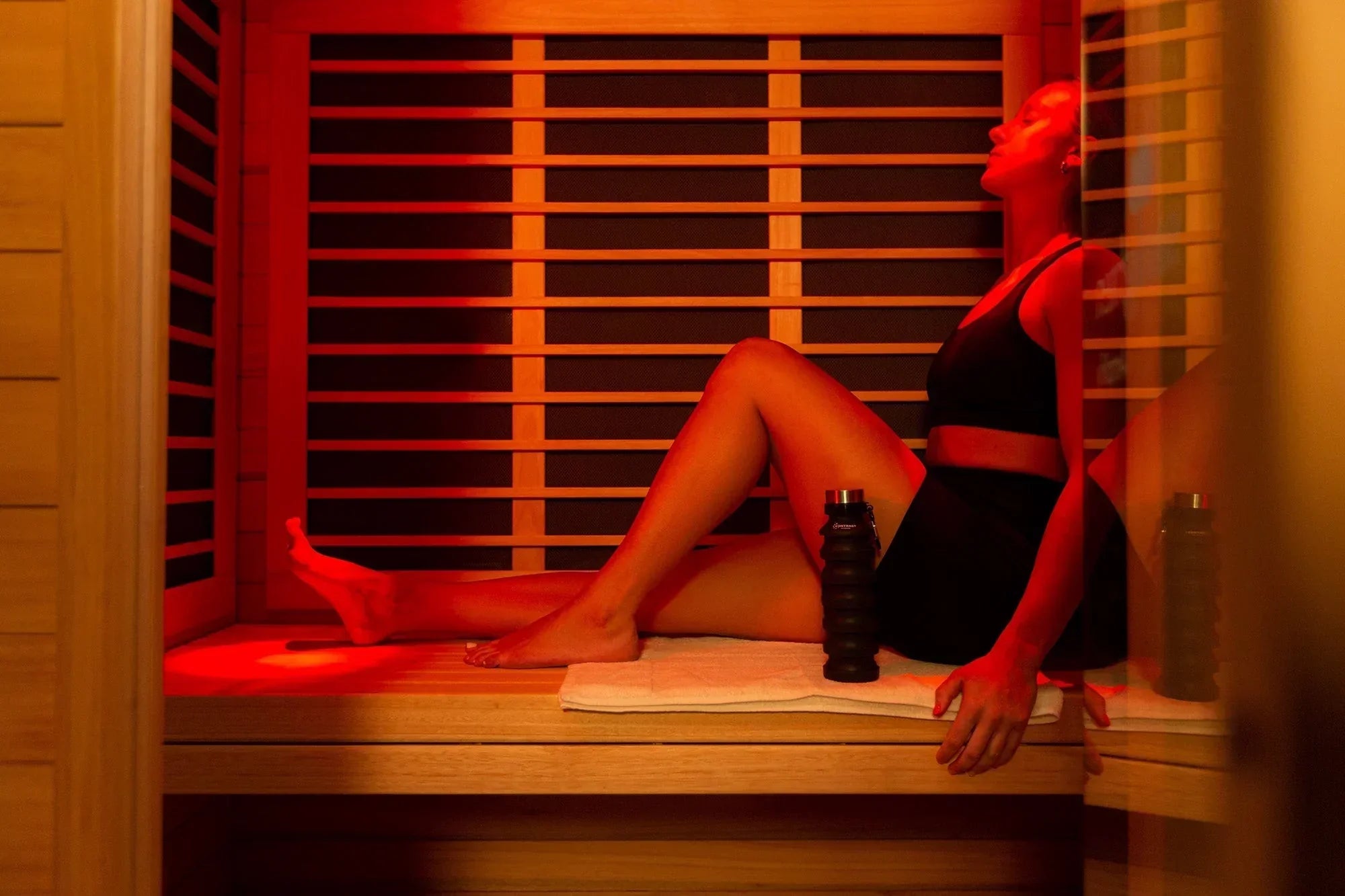
Heat therapy is one of the most established and widely used recovery approaches in both medical and everyday wellness contexts.
Rather than acting as a treatment or cure, heat therapy works by supporting the body’s natural regulatory and relaxation processes through controlled exposure to warmth.
To use heat therapy effectively, it is important to understand what it does, how it works, and where its limitations lie.
What Is Heat Therapy?
Heat therapy, also known as thermotherapy, refers to the use of warmth applied to the body to promote relaxation, circulation, and tissue extensibility.
In medical and wellness contexts, heat therapy may be delivered through:
-
Warm compresses or heating pads
-
Hot water immersion
-
Traditional sauna
-
Infrared or passive heat exposure
While the delivery methods differ, the underlying principle remains the same:
raising tissue temperature in a controlled, non-invasive way.
How Heat Therapy Affects the Body
1. Increased Blood Flow
When heat is applied to the body, blood vessels near the surface dilate (vasodilation).
This increased blood flow helps:
-
Deliver oxygen and nutrients to tissues
-
Support the removal of metabolic byproducts
-
Create a sense of warmth and comfort
This process is supportive, not corrective — it does not “fix” underlying conditions but may assist the body’s normal recovery processes.
2. Muscle Relaxation and Reduced Stiffness
Heat increases tissue elasticity, allowing muscles and connective tissues to relax more easily.
This is why heat therapy is often associated with:
-
Temporary relief from muscle tightness
-
Reduced sensation of stiffness
-
Improved comfort during rest
It is important to note that heat therapy does not repair muscle damage, but it can help reduce guarding and tension that often accompany discomfort.
3. Nervous System Response
Sustained warmth can influence the autonomic nervous system, encouraging a shift toward a calmer, parasympathetic state.
For many people, this is experienced as:
-
Slower breathing
-
Reduced perception of stress
-
A general sense of ease
This effect is highly individual and influenced by environment, duration, and mental state.
Heat Therapy vs. Medical Treatment
Heat therapy is best understood as a supportive modality, not a medical treatment.
It:
❌ Does not cure disease
❌ Does not heal injuries
❌ Does not replace medical care
Instead, it may:
✔ Support comfort
✔ Encourage relaxation
✔ Assist recovery when used appropriately
For acute injuries, inflammation, or certain medical conditions, heat therapy may be inappropriate.
Medical guidance should always be sought when there is uncertainty.
The Role of Mindfulness and Breath in Heat Therapy
Heat alone does not determine the outcome of the experience.
How the body responds to warmth is strongly influenced by:
-
Breathing patterns
-
Mental state
-
Awareness of bodily signals
When heat exposure is paired with slow, intentional breathing and mindful attention, the experience often becomes:
-
More tolerable
-
More calming
-
Less stimulating or overwhelming
This integration helps prevent heat from becoming a stressor and supports a regulated, restorative response rather than simple sensory stimulation.
Duration, Intensity, and Individual Response
There is no universal “correct” temperature or duration for heat therapy.
Responses vary based on:
-
Individual heat tolerance
-
Hydration status
-
Cardiovascular health
-
Environmental conditions
Short, consistent exposure is often better tolerated than prolonged or intense sessions.
Listening to bodily signals — such as dizziness, discomfort, or fatigue — is essential.
Heat Therapy as a Long-Term Practice
When approached with moderation and awareness, heat therapy can be integrated into daily life as a recovery practice, not a performance challenge.
In this context, heat therapy supports:
-
Regular relaxation
-
Nervous system regulation
-
A structured pause within busy routines
The value lies not in intensity, but in consistency and attentiveness.
A Balanced Perspective
Heat therapy is neither a miracle solution nor a superficial trend.
It is a well-established supportive practice that, when used thoughtfully, can contribute to comfort and recovery.
Used without awareness, it may become overstimulating or ineffective.
Used with intention, it can create space for the body to rest, regulate, and recover naturally.
At Avolis Recovery
Avolis Recovery approaches heat therapy as part of a broader recovery environment — one that emphasizes mindfulness, breath, and respect for the body’s natural rhythms.
Heat is not something to push through.
It is something to meet with attention, patience, and care.


Share:
Cold Therapy: Recalibrating the Body and Mind through Conscious Practice