

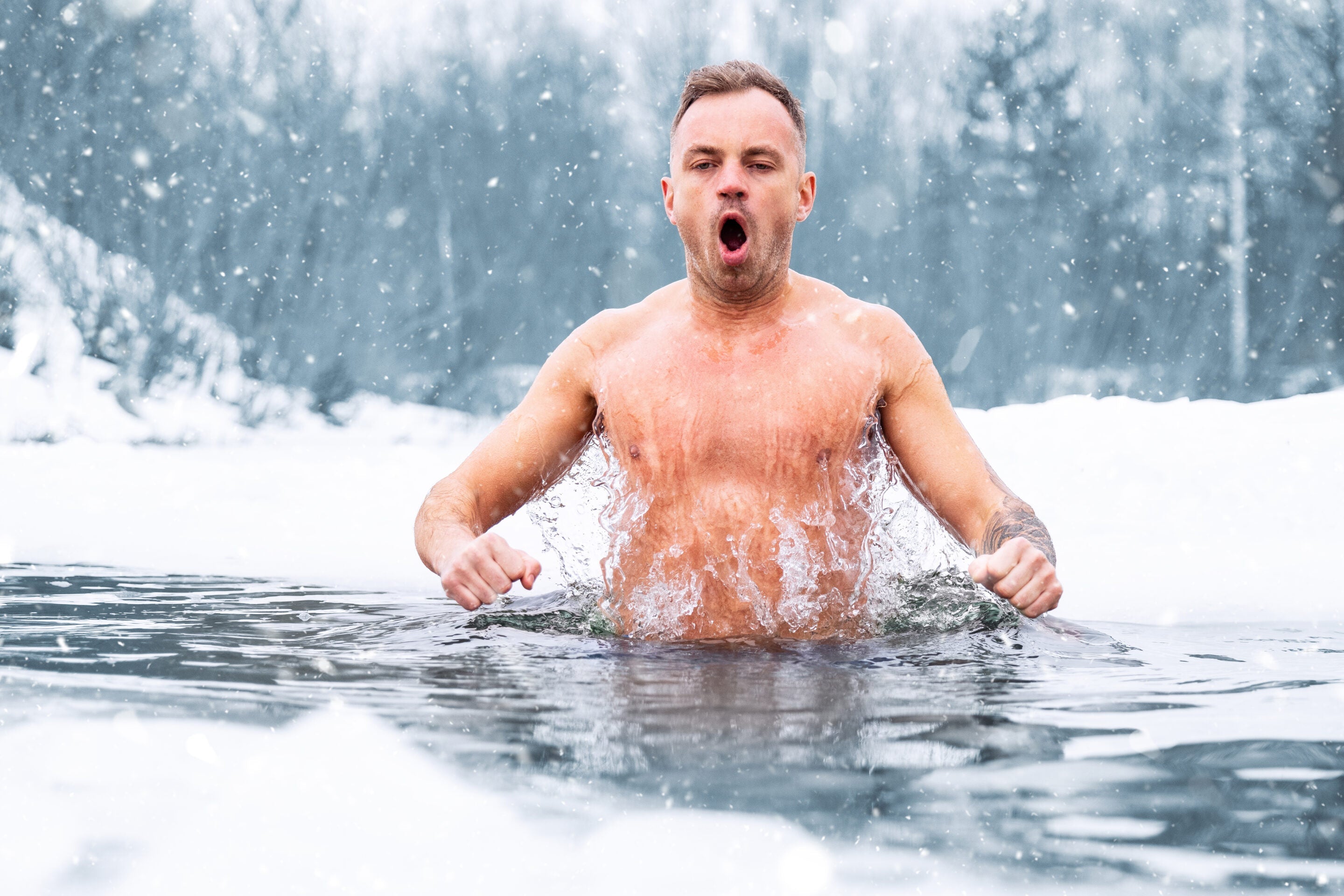
What Is Cold Therapy?
Cold therapy, or cold exposure therapy, refers to the intentional use of cold — through methods like cold showers, ice baths, or outdoor immersion — to stimulate the body’s natural regulatory systems.
Unlike passive exposure, controlled cold therapy is a mindful practice, where the goal is not to test endurance, but to restore balance between the nervous system, circulation, and mind.
The Science Behind Cold Exposure
When exposed to cold, the body reacts immediately — blood vessels constrict, heart rate increases, and breathing becomes sharper.
These physiological responses activate the sympathetic nervous system (the body’s “alert” mode).
However, when practiced safely and consciously, short cold exposure (1–3 minutes) followed by recovery allows the body to retrain its autonomic regulation, helping it return to calm more efficiently after stress.
Key benefits supported by research:
|
Benefit |
Mechanism |
Evidence |
|
Improved circulation |
Alternating vasoconstriction (cold) and vasodilation (recovery) enhances vascular elasticity. |
Studies in European Journal of Applied Physiology, 2014 |
|
Reduced inflammation and muscle soreness |
Cold reduces cytokine activity and oxidative stress post-exercise. |
Bleakley & Davison, Sports Med. 2010 |
|
Increased alertness and energy |
Cold exposure increases norepinephrine and endorphin release. |
Shevchuk, Med Hypotheses. 2008 |
|
Stress resilience |
Repeated mild stressors (like cold) train the nervous system for better adaptability. |
Kox et al., PNAS. 2014 |
|
Mood and mental clarity |
Cold activates brain regions linked to mood regulation. |
Van Tulleken et al., BMJ Case Reports. 2018 |
In essence, brief cold exposure — done safely — doesn’t “shock” the body, but rather teaches it how to recover from stress faster and more gracefully.
Mindfulness and Breathing: The Foundation of Safe Cold Practice
Cold therapy is most effective when approached with awareness, not resistance.
Unconscious tension or forceful endurance often leads to overexposure or strain.
Instead, combining cold therapy with mindfulness and intentional breathing helps the body enter a calm yet alert state.
The mindful approach:
Before entering cold water or shower:
- Pause. Notice your state — thoughts, tension, and breath.
- Breathe slowly and consciously. Inhale through the nose, exhale longer through the mouth.
- Meet the cold, don’t fight it. When the cold touches the skin, observe the body’s reaction without judgment.
- Stay for 1–2 minutes, or until the breath stabilizes. The goal is calm presence, not endurance.
This combination — breath + awareness + cold — supports what neuroscience calls parasympathetic activation after sympathetic stress, a balance essential for long-term emotional regulation and physical recovery.
How to Practice Cold Therapy Safely
Step-by-step guide:
- Start small: Begin with cool showers for 30 seconds and gradually lower the temperature over several days.
- Focus on breathing: Keep the breath slow and deep. Avoid gasping or tensing.
- Limit duration: 1–3 minutes is sufficient for most people.
- Warm up gently afterward: Allow the body to heat naturally through movement or light towel drying — not through immediate hot water.
- Avoid if you have heart or circulation issues unless advised by a healthcare professional.
Tools for practice:
- Cold showers — accessible and safe for beginners.
- Cold plunge tubs or ice baths — suitable for more advanced users.
- Contrast therapy — alternating cold and warm exposure for improved circulation.
The Avolis Perspective
At Avolis Recovery™, we view cold therapy not as a challenge, but as a conversation between the body and mind.
It’s an invitation to pause, breathe, and reconnect with the natural intelligence of your physiology.
Through mindfulness-led recovery, we encourage individuals to experience cold exposure as:
· A tool for clarity, not competition.
· A way to awaken awareness, not to push limits.
· A ritual of gentle regulation — helping the nervous system remember how to return to balance.


Share:
Heat Therapy: Understanding Its Role in Recovery
Mindfulness Therapy in Heat & Cold Recovery